Tarantulas, with their captivating appearance and intriguing behaviors, have become increasingly popular as pets. Potential owners often wonder about the average tarantula lifespan, a critical factor in deciding whether to welcome these fascinating creatures into their homes. Understanding how long a tarantula lives involves considering various elements, from the specific species to the quality of care provided. This comprehensive guide explores the average lifespan of tarantulas, the factors influencing their longevity, and provides essential information to help you understand and care for these amazing animals. The average lifespan of a tarantula varies greatly depending on the species and sex of the tarantula. Many factors come into play, including their environment, diet, and overall health. This knowledge is crucial for responsible pet ownership, allowing enthusiasts to provide the best possible care and appreciate their tarantula companions for as long as possible.
What is the Average Tarantula Lifespan?
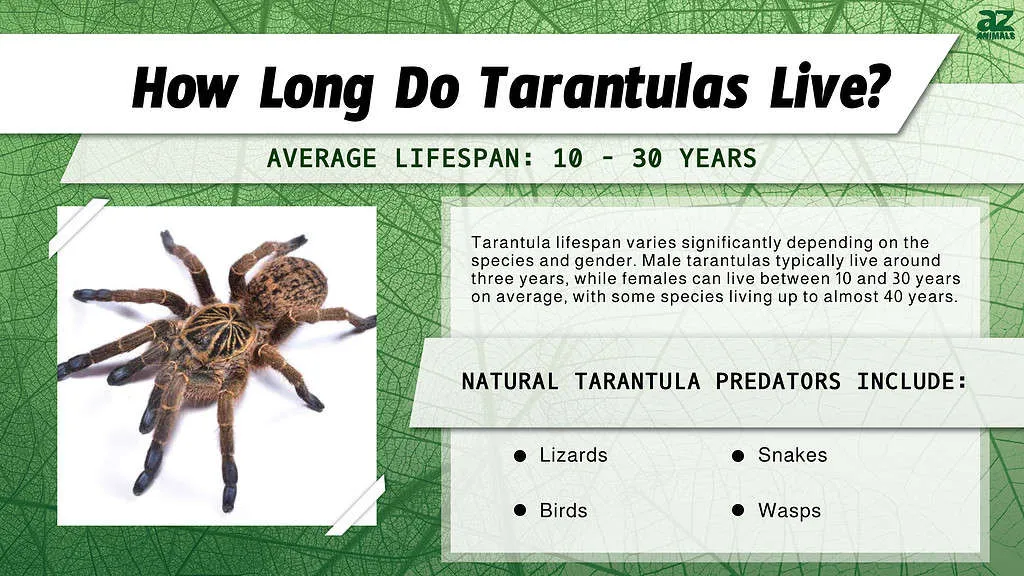
The average lifespan of a tarantula is a captivating subject, varying significantly based on several factors. Generally, male tarantulas tend to have a shorter lifespan than females, primarily due to their mating behavior. Males typically live for a few years, often 2–5 years, after reaching maturity. In contrast, female tarantulas can live much longer, potentially for 10 to 30 years or even longer in some species. The precise lifespan depends on the species, with some of the larger, slower-growing species like the Goliath Birdeater (Theraphosa blondi) known to live for over 25 years. It’s worth noting that these are general averages, and individual tarantulas can live longer or shorter lives depending on various factors, including their care, environment, and genetics. Therefore, when considering a tarantula as a pet, understanding the potential lifespan of the species is essential for providing adequate long-term care and ensuring a fulfilling experience for both the tarantula and the owner.
Factors Influencing Tarantula Lifespan
Several crucial factors significantly impact the average tarantula lifespan, influencing their overall health and longevity. Providing an optimal habitat is vital, including temperature, humidity, and appropriate substrate, to mimic the tarantula’s natural environment and reduce stress. The diet also plays a vital role; a well-balanced diet of insects, supplemented with vitamins and minerals, supports their growth and health. Furthermore, regular care and maintenance, such as cleaning the enclosure and removing uneaten food, are crucial for preventing health issues. The tarantula’s genetics, which are determined by their species, also have a significant impact. Some species have longer lifespans than others. Furthermore, providing a safe and stress-free environment is essential. Avoiding disturbances, such as excessive handling or loud noises, can help reduce stress and promote a longer, healthier life. Understanding and managing these factors are crucial for owners aiming to maximize their tarantula’s lifespan.
Species Differences in Lifespan

The average tarantula lifespan varies considerably based on the species. Certain species are known for their extended lifespans, while others mature and age more rapidly. For instance, the Chilean Rose Hair tarantula (Grammostola rosea), a popular pet, can live for 10-20 years for females. In comparison, larger species like the Goliath Birdeater (Theraphosa blondi) can live for over 25 years, making them a long-term commitment. Conversely, some smaller species or those with faster metabolisms may have shorter lifespans, typically ranging from 5 to 10 years for females. Understanding the specific species’ lifespan is crucial when choosing a tarantula as a pet, as it influences the care required and the long-term commitment expected. Researching the species’ natural habitat, diet, and environmental needs is equally important to ensure the tarantula’s health and longevity.
Male vs Female Tarantulas Lifespan
A key difference in the average tarantula lifespan lies in the contrast between males and females. Generally, male tarantulas have a shorter lifespan than females. After reaching maturity, male tarantulas often live for only a few years, typically 2-5 years. This shorter lifespan is primarily due to their role in reproduction. Males mature, and their primary purpose becomes finding a mate. Once they mate, their lifespan is significantly shortened. On the other hand, female tarantulas can live much longer, sometimes up to 10 to 30 years, or even more, depending on the species. Females do not experience the same physiological stressors associated with mating and can continue to molt and grow over many years. Therefore, when considering a tarantula as a pet, understanding the sex of the tarantula is crucial. This helps set realistic expectations about the long-term commitment involved and allows owners to provide the appropriate care based on the tarantula’s specific needs.
Impact of Habitat and Environment
The habitat and environment significantly influence the average tarantula lifespan. Creating an appropriate environment is essential for their health and longevity. Proper temperature and humidity levels, mirroring their natural habitat, are crucial. The enclosure should be large enough to accommodate the tarantula’s size and provide suitable substrate, such as peat moss, coconut fiber, or a mixture, to maintain humidity and allow for burrowing. It is also important to provide a secure and stress-free environment. Avoiding sudden temperature changes, drafts, and loud noises can significantly reduce stress. Providing hiding places, such as cork bark or artificial plants, will make the tarantula feel secure. Cleanliness is also critical. Regular cleaning of the enclosure, removing uneaten food, and replacing the substrate prevent the buildup of harmful bacteria and mold, contributing to a healthier lifespan. In essence, a well-maintained and appropriate habitat is vital for maximizing the average tarantula lifespan and ensuring the well-being of these fascinating creatures.
Diet and Nutrition for Longevity

Proper diet and nutrition are crucial for the average tarantula lifespan, playing a key role in their overall health and longevity. Tarantulas are carnivores, and their diet should primarily consist of live insects, such as crickets, mealworms, cockroaches, and other appropriately sized prey. The size of the prey should be appropriate for the tarantula’s size, usually no larger than the tarantula’s body. The frequency of feeding also depends on the tarantula’s age and species. Younger, growing tarantulas require more frequent feeding than adults. Providing a varied diet ensures that the tarantula receives all the necessary nutrients. Supplementing their diet with vitamins and minerals, especially calcium, is beneficial. Water is also a critical part of their diet, providing a shallow water dish with clean water to prevent dehydration. Therefore, a balanced diet with live insects, supplemented with vitamins and minerals, ensures they get all the nutrients they need to thrive and live a long, healthy life.
Common Health Issues and Lifespan
Tarantulas, like all living creatures, are susceptible to various health issues that can impact their lifespan. Understanding these issues is essential for responsible pet ownership. One common problem is parasites. Mites and other parasites can infest tarantulas, causing health problems. Providing a clean and well-maintained enclosure helps prevent these infestations. Another frequent issue is dehydration. Ensuring constant access to fresh water is crucial. Infections can also occur, often due to injuries or poor enclosure hygiene. Therefore, maintaining a clean enclosure, avoiding overcrowding, and providing proper ventilation are crucial in preventing infections. Molting problems, where the tarantula struggles to shed its old exoskeleton, can also occur. These can be related to humidity or other environmental factors. Recognising the signs of illness is critical, including lethargy, loss of appetite, or unusual behaviors. Consulting a veterinarian experienced with invertebrates is highly recommended if any health concerns arise. Therefore, being aware of potential health problems and taking preventive measures can significantly contribute to the average tarantula lifespan.
Keeping Tarantulas Healthy Long Term
Keeping tarantulas healthy long term involves consistent and attentive care, contributing to the average tarantula lifespan. Regular monitoring of their environment is crucial. Maintain appropriate temperature and humidity levels, which are specific to the species. Provide a varied and nutritious diet, ensuring a supply of live insects. Cleanliness is also important. Removing uneaten food and cleaning the enclosure regularly prevents health issues. It’s also necessary to provide a stress-free environment. Avoid excessive handling and loud noises, as tarantulas are sensitive to disturbances. Regularly inspect your tarantula for any signs of illness or injury, such as lethargy or loss of appetite. If you notice any issues, consult a veterinarian experienced with invertebrates. Furthermore, consider the species of your tarantula. Researching and understanding their specific needs and behaviors will help you provide the best care possible. Providing adequate care and creating an ideal environment can significantly enhance the average tarantula lifespan and ensure a happy and healthy life for your pet.
Comparing Tarantula Lifespans to Other Pets

Comparing the average tarantula lifespan to other common pets provides valuable context for potential owners. Compared to many other pets, tarantulas can live for a very long time. Dogs, for instance, typically live for 10 to 15 years, while cats often live for 12 to 18 years. Smaller pets, like hamsters, have significantly shorter lifespans, often only living for a few years. Therefore, tarantulas, especially females, offer a long-term commitment. This longevity means that owning a tarantula is a significant responsibility, as you’re committing to caring for them for many years. This is particularly true for females, which can live for decades. When considering a tarantula as a pet, it’s essential to understand the long-term commitment and the differences in lifespan compared to other common pets. This ensures that owners are prepared for the level of care and commitment required throughout the tarantula’s life.
In conclusion, understanding the average tarantula lifespan involves considering factors like species, sex, habitat, and care. While male tarantulas typically have shorter lifespans, female tarantulas can live for decades. By providing proper care, including a suitable environment, a balanced diet, and regular health checks, owners can maximize their pet’s lifespan and ensure a happy and healthy life for these fascinating creatures. Knowing the average lifespan and the influencing factors empowers owners to make informed decisions and enjoy the unique experience of owning a tarantula.