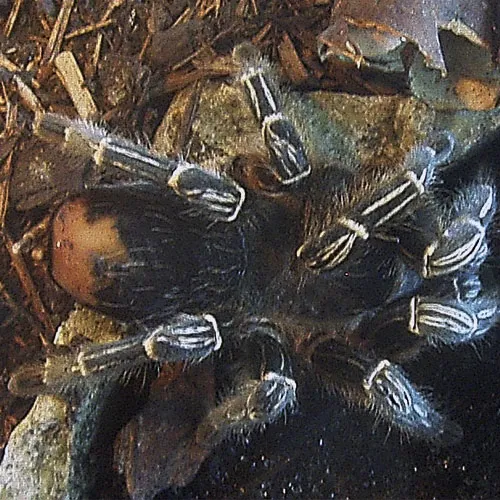
What is a Striped Knee Tarantula (S.K.T.)?
The Striped Knee Tarantula, scientifically known as Aphonopelma seemanni, is a captivating and relatively docile New World tarantula, making it a popular choice for beginner tarantula keepers. Native to the dry forests and grasslands of Costa Rica and Nicaragua, these arachnids are recognized for their striking black and white striped pattern on their legs, which gives them their common name. Their captivating appearance combined with their generally calm temperament has made them one of the more common tarantulas found in the pet trade. Furthermore, their care requirements are relatively straightforward, making them an ideal choice for those new to the world of tarantula keeping.
S.K.T. Overview and Characteristics
Striped Knee Tarantulas are medium to large-sized tarantulas, with females typically reaching a leg span of about 5 to 6 inches, while males are often slightly smaller. They are known for their black and white striped legs, contrasting with a dark brown or black carapace and abdomen. Their bodies are covered in urticating hairs, which they can flick off their abdomen as a defense mechanism if they feel threatened. Despite this defense mechanism, S.K.T.s are generally considered to be a docile species, often preferring to run and hide rather than bite. This makes them a relatively safe option for those who are interested in handling their tarantulas, although it is still important to exercise caution.
S.K.T. Habitat and Origin

In their natural habitat, Striped Knee Tarantulas are terrestrial spiders, meaning they live primarily on the ground. They are native to the dry forests and grasslands of Central America, specifically Costa Rica and Nicaragua. They typically burrow in the ground or find shelter under rocks, logs, or other natural formations. Understanding their natural habitat is key to providing them with a suitable environment in captivity. Replicating their natural environment involves providing the right substrate, temperature, and humidity levels to ensure they thrive. Careful consideration of these factors will help to ensure that your S.K.T. has a long and healthy life.
Setting Up Your Striped Knee Tarantula’s Enclosure
Creating a suitable enclosure is crucial for the health and well-being of your Striped Knee Tarantula. The enclosure should provide a secure and comfortable environment that mimics their natural habitat. This involves selecting the right size enclosure, substrate, temperature, and humidity levels. The enclosure should also have proper ventilation and be escape-proof. A well-set-up enclosure will not only keep your tarantula safe and healthy but will also allow you to observe its fascinating behaviors. Remember, a happy tarantula is a healthy tarantula. A little bit of preparation goes a long way in ensuring the well-being of your pet.
Choosing the Right Enclosure for Your S.K.T.
The size of the enclosure depends on the size of your tarantula. As a general rule, the enclosure should be at least three times the tarantula’s leg span in width and length, and the height should be sufficient to provide several inches of substrate and allow the tarantula to move around comfortably. A 10-gallon tank is often sufficient for a juvenile S.K.T., while a larger enclosure, such as a 20-gallon long tank, is recommended for adult females. Ensure the enclosure has a secure lid to prevent escapes. Plastic storage containers with ventilation holes are also a cost-effective option. The choice of enclosure should always prioritize the safety and comfort of the tarantula.
Substrate Selection for Your S.K.T.

The substrate is the bedding material that covers the bottom of the enclosure. It serves several purposes, including providing a surface for the tarantula to walk on, helping to maintain humidity, and allowing the tarantula to burrow. A good substrate for a Striped Knee Tarantula should hold moisture, be non-toxic, and allow for burrowing. A mixture of coconut fiber, peat moss, and a small amount of vermiculite is a good choice. The substrate should be several inches deep to allow the tarantula to burrow if it desires. Avoid substrates like wood chips, which can mold and harbor mites. The substrate should be kept clean and changed regularly to prevent the buildup of waste and the growth of mold or bacteria.
Temperature and Humidity Control for Your S.K.T.
Striped Knee Tarantulas thrive in temperatures between 75-85°F (24-29°C). A heat lamp or a heat mat placed on the side of the enclosure can be used to maintain this temperature range. It’s important to monitor the temperature with a thermometer to ensure it stays within the appropriate range. The humidity level should be maintained at around 60-70%. This can be achieved by lightly misting the enclosure with water every few days, or more frequently if needed. A shallow water dish should also be provided for the tarantula to drink from. Proper temperature and humidity are essential for the tarantula’s health and molting process.
Feeding Your Striped Knee Tarantula
Feeding your Striped Knee Tarantula is a straightforward process. S.K.T.s are opportunistic feeders and will readily accept a variety of insects. It’s important to provide a diet that is appropriate for their size and stage of life. Overfeeding can lead to health problems, while underfeeding can stunt their growth. Observing your tarantula’s feeding habits will help you determine the right amount of food to provide. Be mindful of uneaten prey, as they can stress your tarantula or even injure it. Regular feeding, with the right type and amount of food, will ensure your S.K.T. stays healthy.
What to Feed Your S.K.T.

A varied diet is crucial for the health of your Striped Knee Tarantula. Suitable food items include crickets, mealworms, dubia roaches, and other commercially available feeder insects. The size of the prey should be appropriate for the size of your tarantula. As a general guideline, the prey should be no larger than the tarantula’s body. It is also beneficial to gut-load the feeder insects with nutritious food, such as vegetables and commercial cricket food, before feeding them to your tarantula. This ensures that your tarantula receives the necessary vitamins and minerals. Always remove any uneaten prey within 24 hours to prevent them from stressing your tarantula.
Feeding Frequency and Amounts
The feeding frequency for your Striped Knee Tarantula depends on its age and size. Spiderlings and juveniles should be fed two to three times a week, while adult tarantulas can be fed once or twice a week. Observe your tarantula’s abdomen. If it is plump and round, your tarantula is well-fed. If it is shrunken, it may need more food. Avoid overfeeding, which can lead to health problems. Also, adjust the amount of food according to your tarantula’s appetite. If your tarantula refuses to eat, it may be preparing to molt. Always provide fresh water, even if your tarantula isn’t eating.
Watering Your Striped Knee Tarantula
Providing fresh water is essential for the health and well-being of your Striped Knee Tarantula. A shallow water dish should be provided at all times. The water dish should be shallow enough to prevent the tarantula from drowning. The water should be changed regularly to prevent the growth of bacteria and mold. In addition to the water dish, you can lightly mist the enclosure with water every few days to maintain the appropriate humidity levels. Ensure that the enclosure does not become waterlogged, as this can lead to health problems. Always use dechlorinated water for both drinking and misting to avoid harming your tarantula.
Handling Your Striped Knee Tarantula (If You Choose To)

While Striped Knee Tarantulas are generally docile, it is still recommended to minimize handling. Tarantulas are delicate creatures, and handling them can be stressful. If you choose to handle your tarantula, do so with caution and at your own risk. Always handle your tarantula over a soft surface, such as a bed or a carpet, in case it falls. Be aware of the tarantula’s behavior and body language. If it appears stressed or defensive, do not attempt to handle it. Always wash your hands thoroughly before and after handling your tarantula. Remember, the best way to observe your tarantula is to let it live undisturbed in its enclosure.
Safety Precautions for Handling
If you decide to handle your Striped Knee Tarantula, it’s crucial to take the necessary safety precautions. Handle your tarantula in a secure, enclosed space to prevent it from escaping. Be aware of the tarantula’s urticating hairs, which can cause skin irritation. Avoid touching your face or eyes after handling your tarantula. If you are bitten, seek medical attention immediately, although bites from Striped Knee Tarantulas are usually not medically significant. Never handle your tarantula if you are not comfortable or if you are under the influence of drugs or alcohol. Always supervise children when they are near the tarantula’s enclosure.
Understanding S.K.T. Behavior
Understanding the behavior of your Striped Knee Tarantula is essential for providing proper care and ensuring its well-being. S.K.T.s are generally docile and tend to hide or run away when threatened. They may flick urticating hairs off their abdomen as a defense mechanism. They may also exhibit defensive postures, such as rearing up or presenting their fangs, if they feel threatened. By observing your tarantula’s behavior, you can learn to recognize signs of stress or discomfort and adjust your care accordingly. This understanding will help you to create a more suitable and stress-free environment.
Common Health Issues and Care

Like any pet, Striped Knee Tarantulas can experience health problems. Common health issues include parasites, fungal infections, and injuries. Parasites can be prevented by maintaining a clean enclosure and providing a varied diet. Fungal infections can be prevented by ensuring proper ventilation and humidity levels. Injuries can be minimized by providing a safe enclosure and avoiding handling. If you suspect your tarantula is sick, consult with a veterinarian who specializes in exotic animals. Early detection and treatment are crucial for the recovery of your tarantula.
Identifying and Preventing Health Problems
Regularly inspect your Striped Knee Tarantula for signs of illness. Look for lethargy, loss of appetite, unusual behaviors, or any visible injuries. Check the enclosure for mold, mites, or other pests. Maintaining proper hygiene and environmental conditions is crucial to prevent health problems. Provide a varied diet, fresh water, and appropriate temperature and humidity levels. Quarantine new tarantulas before introducing them to your collection to prevent the spread of diseases. If you observe any signs of illness, isolate the affected tarantula and seek veterinary care immediately. Prevention is always better than cure when it comes to tarantula health.
Molting Process and What to Expect
Molting is a natural process in which tarantulas shed their exoskeleton to grow. During molting, your Striped Knee Tarantula will typically become less active and may refuse to eat. It may also create a web mat on the ground, where it will lie on its back to molt. The molting process can take several hours or even days. Do not disturb your tarantula during this time. After molting, the tarantula’s new exoskeleton will be soft and vulnerable, so it is important to avoid handling it for a few days. Provide a fresh water dish after molting. The frequency of molting decreases as the tarantula matures.
Conclusion

Caring for a Striped Knee Tarantula is a rewarding experience. With proper care, you can enjoy the fascinating world of these amazing creatures. By providing a suitable enclosure, proper temperature and humidity, a varied diet, and fresh water, you can ensure your tarantula thrives. Remember to handle your tarantula with caution, and always prioritize its well-being. Enjoy the unique experience of owning a Striped Knee Tarantula and learn about their fascinating behaviors and characteristics. Your dedication to their care will be reflected in their health and longevity.