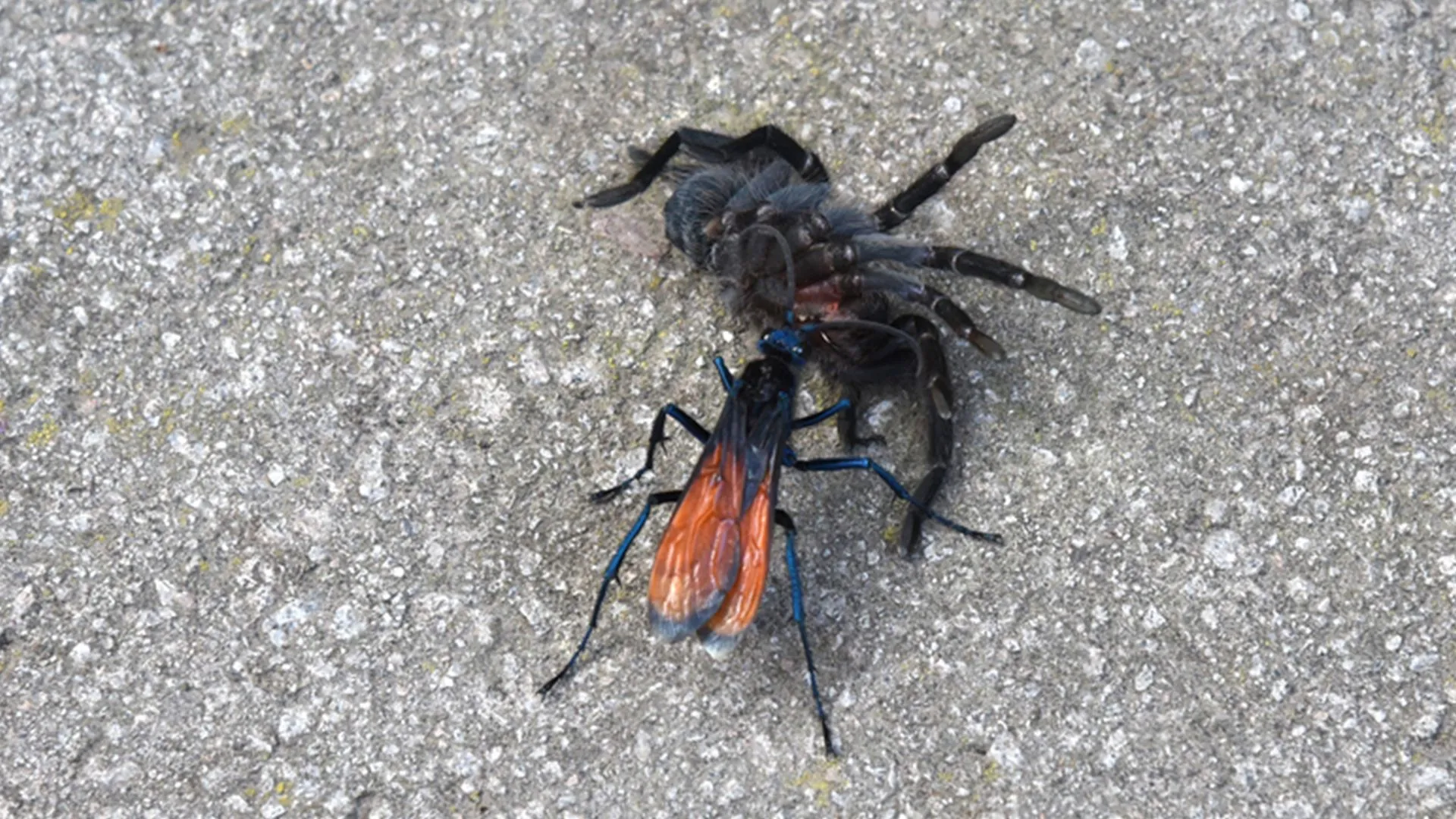
What is a Tarantula Hawk Wasp?
The tarantula hawk wasp, a formidable insect with a reputation that precedes it, is a fascinating creature belonging to the Pompilidae family. These wasps are renowned for their remarkable size, striking appearance, and, most notably, their hunting behavior. As their name suggests, they are predators of tarantulas, and their sting is considered one of the most painful in the insect world. Found primarily in arid regions of the Americas, these wasps play a vital role in their ecosystem. Their existence is a testament to the diversity and often brutal beauty of nature, and the tarantula hawk wasp continues to captivate both scientists and nature enthusiasts. Their unique traits include the impressive ability to paralyze their prey, making them a subject of ongoing study and fascination.
The Appearance of the Tarantula Hawk Wasp
Size and Distinguishing Features

Tarantula hawk wasps are among the largest wasps, with a body length that can reach up to 2 inches (5 cm). They have a striking appearance, characterized by a dark, often black, body and vibrant, rust-colored wings. Their robust build and long legs are well-suited for their predatory lifestyle. The females are generally larger than the males, and they possess a formidable stinger used for paralyzing tarantulas. The contrast between their dark bodies and brightly colored wings makes them easily identifiable, a warning signal to potential predators. These wasps also have a distinctive flight pattern, which often involves low, hovering movements as they search for tarantulas to hunt. The impressive size and appearance of the tarantula hawk wasp command attention and make it one of the most recognizable insects in its habitat.
Where Do Tarantula Hawk Wasps Live?
Geographic Distribution and Habitat
Tarantula hawk wasps are primarily found in arid and semi-arid regions of the Americas, including the southwestern United States, Mexico, and parts of South America. They thrive in habitats that support their primary prey, tarantulas. These habitats typically include deserts, scrublands, and open woodlands. The wasps require areas with sandy or loamy soil for nesting, as well as a sufficient population of tarantulas. They are often seen in areas where tarantulas are common, such as near their burrows. The distribution of tarantula hawk wasps is influenced by climate, prey availability, and the presence of suitable nesting sites. These wasps have adapted well to these environments, making them a key component of the ecological balance within their range.
How the Tarantula Hawk Wasp Hunts

The Hunting Process
The hunting process of the tarantula hawk wasp is a dramatic spectacle of nature’s efficiency. The female wasp begins by searching for a tarantula, often by actively patrolling the ground or vegetation. Once a tarantula is located, the wasp engages in a fierce battle. The wasp uses its formidable sting to paralyze the spider. The sting is delivered with precision to a nerve center, rendering the tarantula immobile. After paralyzing the tarantula, the wasp drags the massive spider, often many times its size, back to its nest. The wasp then lays a single egg on the tarantula’s abdomen. The entire process is a testament to the wasp’s strength, determination, and predatory skills. The wasp’s hunting strategy showcases the complex interactions between predator and prey, making the tarantula hawk wasp a remarkable example of adaptation and survival.
The Tarantula Hawk Wasp Sting
The Schmidt Sting Pain Index

The sting of a tarantula hawk wasp is widely recognized as one of the most painful insect stings in the world. Dr. Justin Schmidt, a renowned entomologist, developed the Schmidt Sting Pain Index to rate the relative pain caused by various insect stings. On this scale, the tarantula hawk wasp sting ranks at the highest level, with a pain level of 4. This pain is described as excruciating, debilitating, and causing an intense burning sensation. The sting does not typically cause any long-term health issues, but the pain can be severe and last for several minutes. The Schmidt Sting Pain Index provides a scientific framework for understanding the intensity of various insect stings and highlights the remarkable pain associated with the tarantula hawk wasp.
What Do Tarantula Hawk Wasps Eat?
Their Diet
While the adult tarantula hawk wasps primarily feed on nectar from flowers, their larvae have a much more particular diet. The larvae are obligate parasitoids, meaning they require a host to survive. They feed exclusively on the paralyzed body of a tarantula. The wasp carefully places its egg on the abdomen of the tarantula, and when the egg hatches, the larva begins to consume the spider from the outside. The larva ensures the tarantula remains alive for as long as possible, consuming non-essential tissues first. This feeding strategy allows the larva to grow and develop within a safe and nutritious environment. When the larva has fully developed, it pupates inside the tarantula’s exoskeleton and eventually emerges as an adult wasp, thus completing its life cycle.
Life Cycle of a Tarantula Hawk Wasp

The Larval Stage
The life cycle of a tarantula hawk wasp is a fascinating process characterized by distinct stages. It begins with the adult female wasp hunting and paralyzing a tarantula. She then drags the spider to a pre-made nest or burrow and lays a single egg on its abdomen. The egg hatches into a larva, which immediately begins to feed on the tarantula. The larva consumes the spider, growing and molting several times. As the larva grows, it progressively consumes the tarantula’s body, feeding on non-vital organs first. The larva eventually pupates inside the spider’s exoskeleton. Once the pupa transforms into an adult wasp, it chews its way out of the tarantula’s body and emerges as a fully formed adult wasp. The entire life cycle, from egg to adult, typically takes several months.
Mating Habits and Nesting
Mating habits and nesting behaviors of the tarantula hawk wasp are as unique as its other behaviors. Male tarantula hawk wasps spend their time foraging for nectar and establishing territories. They patrol specific areas, waiting for females to appear. When a female is spotted, the male attempts to mate with her. After mating, the female wasp begins the process of finding and hunting a tarantula. She digs a nest in the ground, often in sandy or loamy soil, and prepares it for her future offspring. Once she has paralyzed a tarantula, she drags it back to the nest and lays a single egg on the spider’s abdomen. She then seals the nest, leaving the larva to develop. Nesting behaviors are therefore very important, ensuring the survival of the wasp’s offspring.
Are Tarantula Hawk Wasps Dangerous?

Precautions to Take
While the sting of a tarantula hawk wasp is extremely painful, it is rarely life-threatening to humans. However, it is essential to exercise caution and take precautions if you encounter these wasps. Avoid provoking or disturbing them, as they will only sting in self-defense. If you are stung, the immediate pain is intense and can be followed by a period of throbbing. Remove the stinger if it remains embedded and seek medical attention if you experience any severe reactions, such as difficulty breathing or swelling. The best approach is to observe these fascinating creatures from a safe distance, appreciating their role in the ecosystem without putting yourself at risk. Being aware of their behavior, habitat, and potential for a painful sting will help you to stay safe.
Interesting Facts About Tarantula Hawks
Tarantula hawk wasps are filled with a variety of interesting and unique traits. Here are some facts
  The female tarantula hawk wasp is the state insect of New Mexico.
  Their stings are ranked second only to the bullet ant on the Schmidt Sting Pain Index.
  They are a significant predator of tarantulas, controlling the spider population.
  The females are much larger than the males.
  They have a distinctive mating ritual where the males patrol territories to attract females.
  Their larvae feed exclusively on tarantulas.
  They have a vital role in maintaining balance in their ecosystems.